
Loading...
Serving Santa Clara, CA and surrounding areas. (669) 326-6241
SCM Santa Clara Masonry is a licensed masonry contractor serving Antioch with driveway pavers, retaining wall construction, and brick repair. Antioch's clay soil expands and contracts every season, and with summer temperatures regularly above 100 degrees, concrete flatwork and exterior masonry take a harder beating here than in most Bay Area cities. We work on Antioch properties regularly and build that reality into every repair and installation we do.
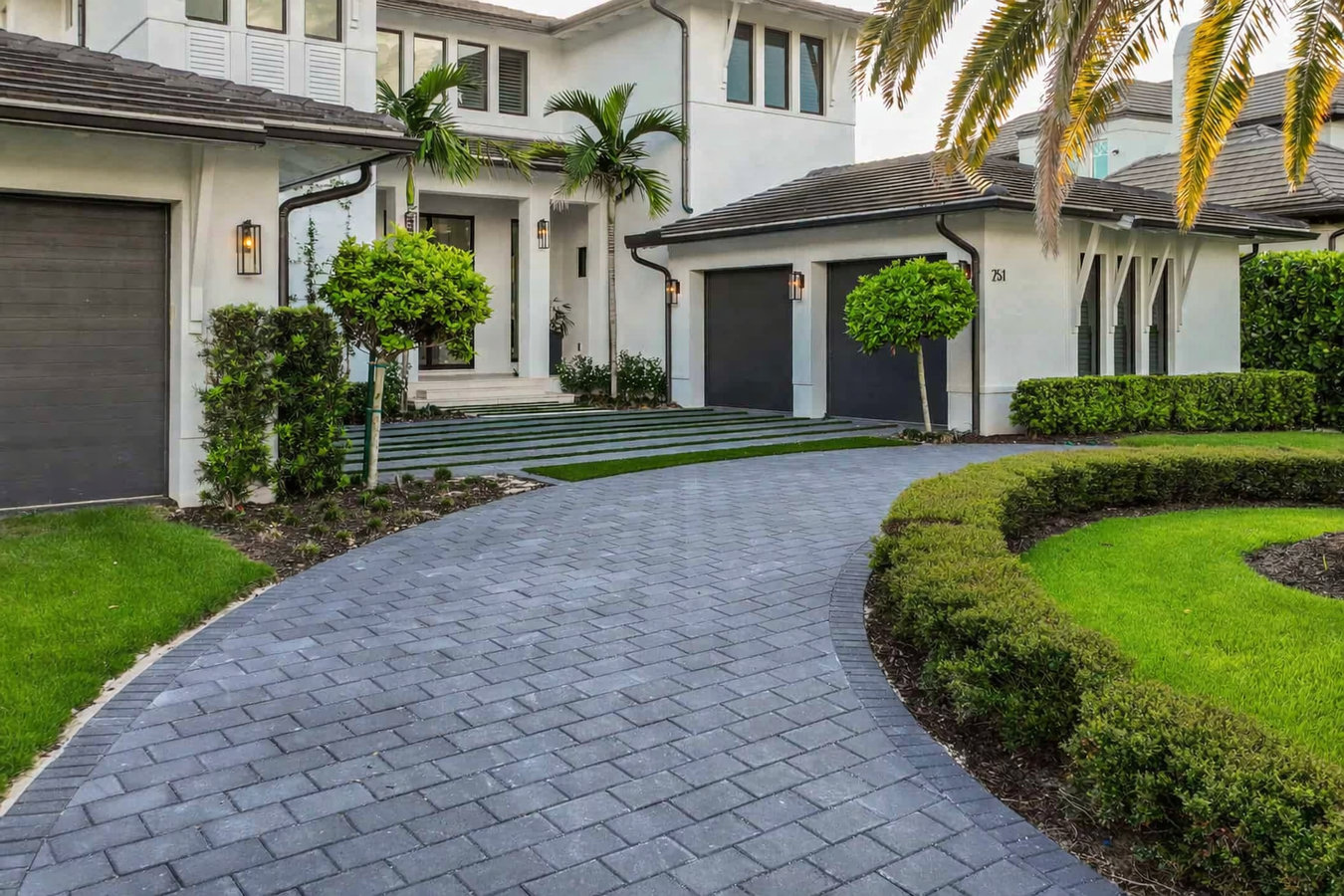
Concrete driveways in Antioch crack faster than in coastal cities because clay soil expands and contracts every wet and dry season, while summer heat above 100 degrees stresses the surface from above. Paver systems handle that movement better than a single poured slab - individual units can shift slightly without cracking across the whole driveway. If you have had the same concrete section repaired more than once, read through our full driveway pavers service page to understand why base preparation is where the real work happens.
Properties in east Antioch near Deer Valley Road and Lone Tree Way often have graded yards where retaining walls hold back real soil loads. When walls from the 1990s and early 2000s were built without adequate drainage behind them, wet-season clay pressure slowly works them out of alignment. We rebuild failing walls and install new ones with drain rock and perforated pipe integrated from the start, so the first heavy rain is not the test.
Homes built between the 1970s and 1990s across Antioch have brick garden walls, chimney faces, and planter borders that have been in the same clay soil for 30 to 50 years. Mortar that softened in the heat and absorbed moisture during wet winters is now crumbling out of the joints on many of these structures. We repoint open joints, replace spalled brick faces, and match the original mortar so the repair blends with the surrounding wall.
Antioch's standard suburban lots - typically 5,000 to 8,000 square feet - almost all have concrete walkways from the driveway to the front door and around the side of the house. Those walkways heave and crack for the same reason driveways do: clay soil expanding with winter rain and contracting through summer. Paver walkways can be installed with a flexible base that tolerates that movement without producing tripping hazards at every joint.
Homes built in Antioch during the 1980s and 1990s growth years are now old enough to show early signs of foundation movement: sticking interior doors, diagonal cracks near door frames, and floors that slope slightly across a room. The expansive clay beneath these homes puts cyclical stress on the foundation every season. A cracked foundation caught early is a fraction of the cost of one addressed after years of seasonal shifting.
Concrete block is the standard boundary wall material for Antioch's single-family neighborhoods, and many of those walls were built during the city's rapid growth period without adequate steel reinforcement. Block walls that lean, show stair-step cracking along mortar joints, or have visible horizontal cracks at mid-height are signaling that the footing or core fill is no longer doing its job. We assess what is salvageable and what needs to be rebuilt from the footing up.
Antioch sits inland from the coast, which means it misses the temperature-moderating effect of Bay fog and instead gets the full force of Central Valley heat in summer. July and August temperatures above 100 degrees are a normal part of life here, not a rare event. That sustained heat dries out mortar, causes concrete to expand and crack at joints, and accelerates the deterioration of brick faces already weakened by years of wet winters. The masonry on a 25-year-old Antioch home often looks older than masonry on a 25-year-old home in San Francisco because the inland climate is harder on exterior materials. Contractors who primarily work milder coastal cities often underestimate how much more aggressive the base preparation and material selection need to be here.
The soil is the other constant. Much of Antioch is built on clay-heavy ground that behaves differently depending on the season. During the rainy period from November through March, expansive clay soils absorb water and swell, pushing against driveways, retaining walls, block fences, and concrete patios. Through the dry summer that follows, the same clay contracts, leaving gaps where material pulled away from footings and slab edges. After enough cycles, cracks appear and uneven surfaces become tripping hazards. Homes near the river in low-lying areas close to the Sacramento-San Joaquin River Delta add drainage pressure to that equation, since groundwater levels can rise significantly after heavy rain. Designing for that environment requires understanding both the soil and the seasonal water table, not just applying a standard repair.
We pull permits for structural masonry work through the City of Antioch Community Development Department. The properties we see most often here are single-family homes on mid-size suburban lots - houses built between the late 1970s and early 2000s with concrete driveways and walkways that have been through enough seasonal cycles to need real attention. The mix of owner-occupied homes and rental properties in the older sections near downtown and Highway 4 also means we regularly work for both resident homeowners and landlords managing deferred maintenance.
Antioch stretches along a wide footprint from the waterfront area near the Antioch waterfront and marina in the west to the newer subdivisions off Deer Valley Road in the east. The Antioch BART station - the eastern end of the Bay Area rail system - makes the city a practical base for commuters who need contractors they can trust to show up and finish without oversight. Many Antioch families spend weekends at Contra Loma Regional Park, and those same homeowners often want paver patios and walkways that hold up through the summer heat.
We also work in nearby Concord to the west and Vallejo to the north - both cities that share Antioch's clay soil conditions and a housing stock hitting the age where masonry maintenance becomes unavoidable.
Reach out by phone or through the online form. We reply to all new inquiries within one business day. We will ask about your property - what you are seeing, how long it has been an issue, and the approximate age of your home - so the site visit is focused and efficient.
We come to your Antioch property, look at the actual conditions, and give you a written estimate that covers scope, materials, and total cost. This is where cost questions get answered directly - you know the full number before making any decision. No obligation after the estimate.
For permitted work, we handle the city permit application. You do not manage that process. Once approved, we confirm the start date and walk you through the timeline - including how long your driveway or work area will be off limits so you can arrange parking ahead of time.
The crew completes the work and cleans the site before leaving. We walk you through what was done. Permitted projects include a city inspection sign-off, and you receive documentation for your records - useful if you sell the home or need to reference the work later.
We serve homeowners across Antioch - from the older neighborhoods near downtown to the newer subdivisions in east Antioch near Deer Valley Road. Call or use the form and we will respond within one business day.
(669) 326-6241Antioch is one of the largest cities in Contra Costa County, with a population of around 115,000 people according to U.S. Census data. The city grew quickly as families moved east from more expensive Bay Area cities, and that growth produced a wide mix of housing: ranch houses and stucco-sided homes near downtown and along Highway 4 built in the 1970s and 1980s, and larger two-story homes in the newer subdivisions off Lone Tree Way and Deer Valley Road built in the late 1990s and 2000s. Most of the city is single-family residential with attached garages, concrete driveways, and backyard patios - the kind of concrete flatwork that needs attention after a few decades of inland California weather. About 58 percent of homes are owner-occupied, which means most Antioch residents have a genuine stake in keeping their properties in good condition.
The city sits on the edge of the Sacramento-San Joaquin River Delta, where the river meets the eastern Bay Area. The Antioch waterfront has a marina and a small historic downtown district that give the city character beyond its role as a commuter hub. The Antioch BART station - the eastern end of the Bay Area rail system - connects thousands of residents to Oakland and San Francisco daily. Up in the hills above the city, Contra Loma Regional Park offers trails, a reservoir, and a swimming lagoon that Antioch families visit regularly. We serve homeowners throughout the city and in nearby Concord, which shares similar clay soil conditions and housing age ranges.
Structural foundation repairs to protect your property from damage and settlement.
Learn moreProfessional chimney rebuilding, tuckpointing, and cap repairs for safe operation.
Learn moreMortar joint restoration that extends the life of your brick and stone masonry.
Learn moreEngineered retaining walls in brick, block, and stone to control erosion and grade.
Learn moreHistoric and modern masonry restoration to revive deteriorated structures.
Learn moreCustom brick and stone fireplaces built to code for indoor and outdoor spaces.
Learn moreNatural and manufactured stone veneer applied to walls, exteriors, and accents.
Learn moreDurable CMU block walls for residential, commercial, and structural applications.
Learn moreConcrete block foundation walls installed with reinforcement for long-term integrity.
Learn moreCustom masonry outdoor kitchens built for entertaining and all-weather durability.
Learn moreBrick and stone walkways that enhance your landscape and welcome visitors.
Learn moreNew brick walls installed for fencing, privacy, and architectural detail.
Learn morePrecision mortar pointing to weatherproof and strengthen aging brick joints.
Learn moreServing these cities and communities.
Call us or use the contact form and we will get back to you within one business day to discuss your project and schedule a site visit.